


If you are building a business in India, you quickly run into an awkward problem.
Work has become flexible. Teams are remote. Founders operate from home, client sites, or across cities.
But compliance still expects one thing from you: a clean, verifiable address that can receive official communication.
That is why people ask the same question before they do GST registration or company incorporation.
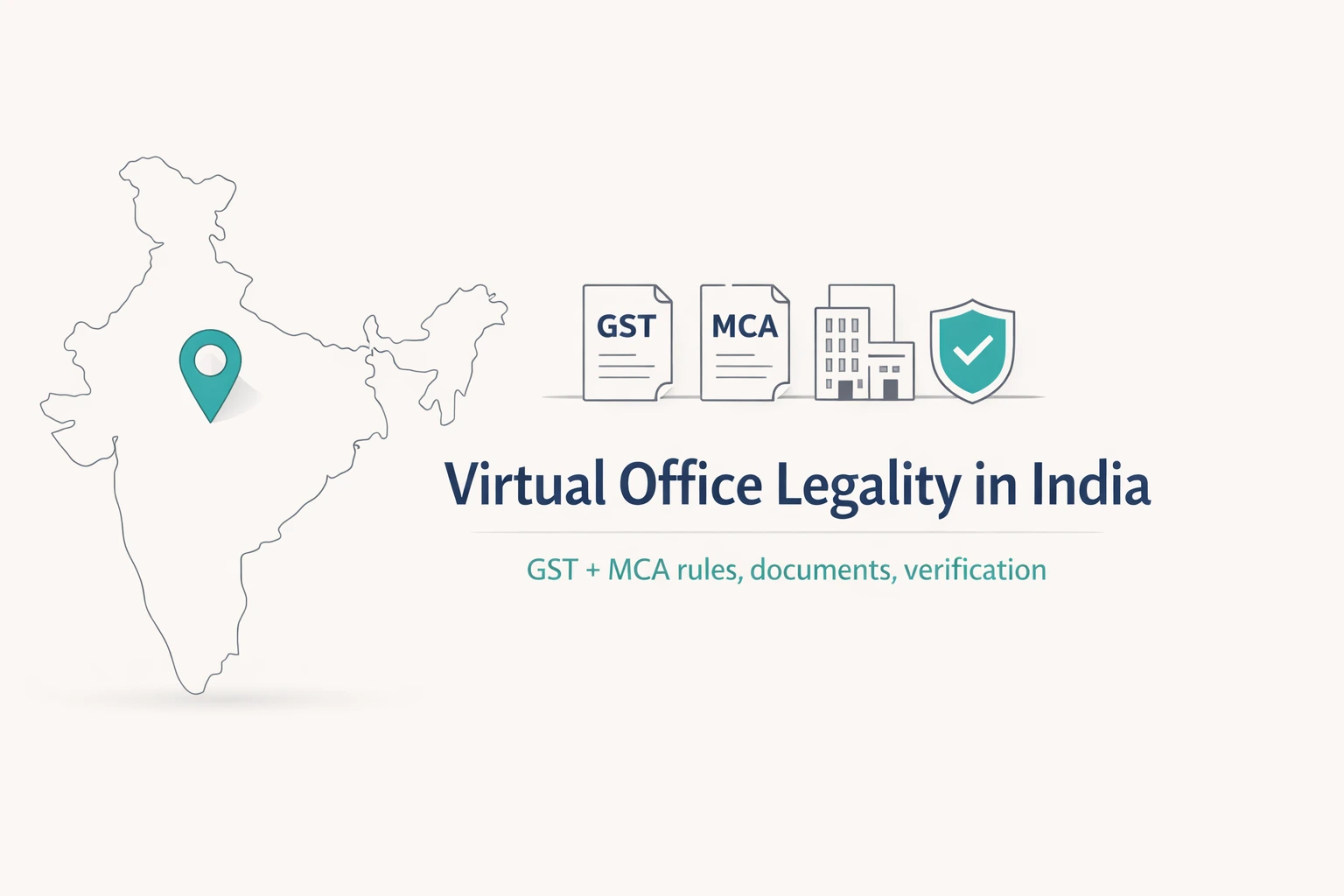
Is a virtual office legal in India for GST and company registration, or will it get rejected later?
This guide answers that in plain language, without shortcuts. It explains what GST and MCA actually look for, what documents make a virtual office acceptable, and what practical steps reduce rejection risk.
Quick Answer: Yes, If Your Address Is Real And Documented
In most genuine cases, a virtual office is accepted for GST registration and for company registration, as long as it is a real, traceable premises and you can prove your right to use it.
The confusion comes from the phrase “virtual”.
Authorities do not care whether you sit there every day. They care whether:
-
The premises exists and can be verified.
-
You have a valid arrangement to use it.
-
Official communication can reach you, and you can respond.
Where people get into trouble is when they buy “just an address” with weak paperwork, mismatched details, or a setup that cannot handle verification.
What A Virtual Office Means In Legal Terms
A proper virtual office is not a PO box.
For compliance purposes, think of a virtual office as a service-based right to use a commercial address, supported by documentation and basic operational handling like mail receipt.
You are not renting an entire office floor. You are renting a structured, documented arrangement that proves you are permitted to use that address.
That documentation trail is the difference between “accepted” and “risky”.
Is A Virtual Office Legal For GST Registration In India?
For GST, your address is tied to your “place of business”.
GST frameworks focus on whether your place of business is genuine and documented. They do not say you must own the property or have a traditional lease in your own name.
What GST Requires From A Place Of Business
When you apply, the officer checks your application and accompanying documents. If your profile triggers it, physical verification can also happen.
In practical terms, GST expects your address to be:
-
Identifiable and verifiable.
-
Supported by proof based on how you “possess” the premises (owned, rented, consent, shared).
-
Consistent across the form and the documents you upload.
Proof Of Address Documents That Usually Get Accepted
The GST portal document checklist indicates common address proofs like electricity bill, rent or lease agreement, consent letter, and government-issued premises documents.
What makes a virtual office workable is that a compliant provider can give you:
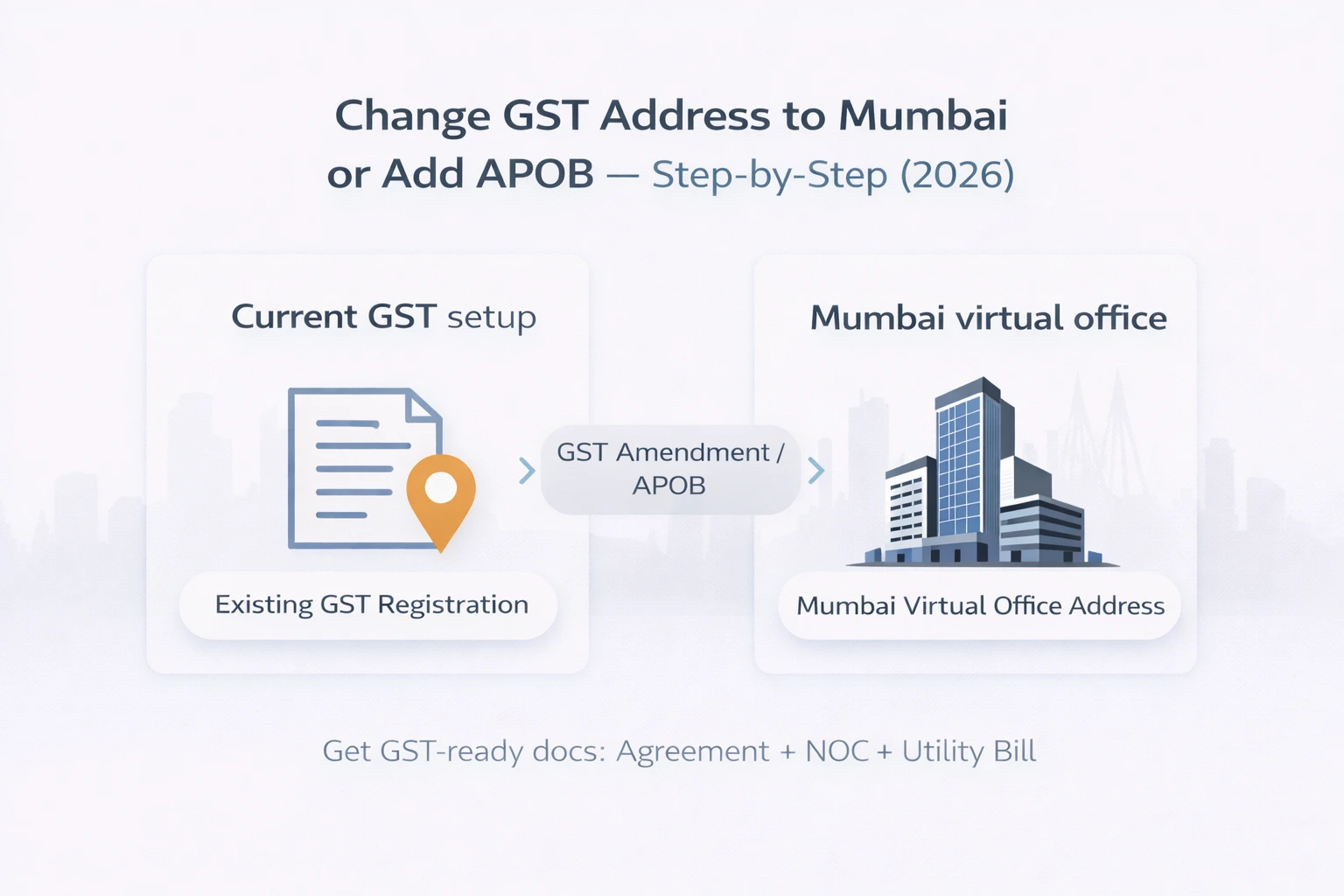
• An agreement or service contract that clearly states your right to use the address
• A permission document such as an NOC or consent letter
• A supporting premises proof such as a recent utility bill or property-related document
The exact combination depends on how the premises arrangement is structured, and what your officer requests.
CBIC’s Latest Direction On GST Registration Document Checks
A key update many articles miss is that CBIC has issued detailed instructions to reduce avoidable queries and unnecessary document demands during GST registration processing.
Instruction No. 03/2025-GST explains that FORM GST REG-01 already contains an indicative list of documents, and officers should adhere to it. It also clarifies what is sufficient for owned and rented premises, and discourages asking for extra documents like PAN, Aadhaar, or photographs of the lessor when ownership proof is already established through the listed documents.
This matters because it supports a simple compliance approach: submit the correct category of proof, ensure legibility, and avoid mismatches.
Physical Verification And Site Visits: When And Why They Happen
GST law allows physical verification before or after registration in certain cases. Rule 25 covers how verification is done and that the officer uploads a verification report with photographs in FORM GST REG-30.
Virtual offices are not automatically “verification magnets”. Verification is typically triggered by risk signals such as Aadhaar authentication issues, profile flags, or officer discretion.
What matters for you is readiness:
• Your address should be locatable and properly described
• The premises should be able to confirm your arrangement if asked
• Your documentation should match exactly what you submitted in the application
Common GST Rejection Reasons And How To Avoid Them
Most GST issues blamed on “virtual office” are actually process issues.
-
Address mismatch
Even small differences in punctuation, building name, floor, or pin code can trigger clarifications. Keep one standard format across every document and form entry. -
Incorrect nature of possession selection
If the address is provided under a consent arrangement, but the upload looks like a rent setup, it creates confusion. Choose the correct category and align uploads. -
Illegible or incomplete documents
CBIC’s instruction explicitly highlights legibility and relevance, and that clarifications should be asked when documents are incomplete or do not match. -
Weak provider paperwork
If the provider cannot give you a clean permission trail and premises proof, do not proceed. This is where cheap plans become expensive later.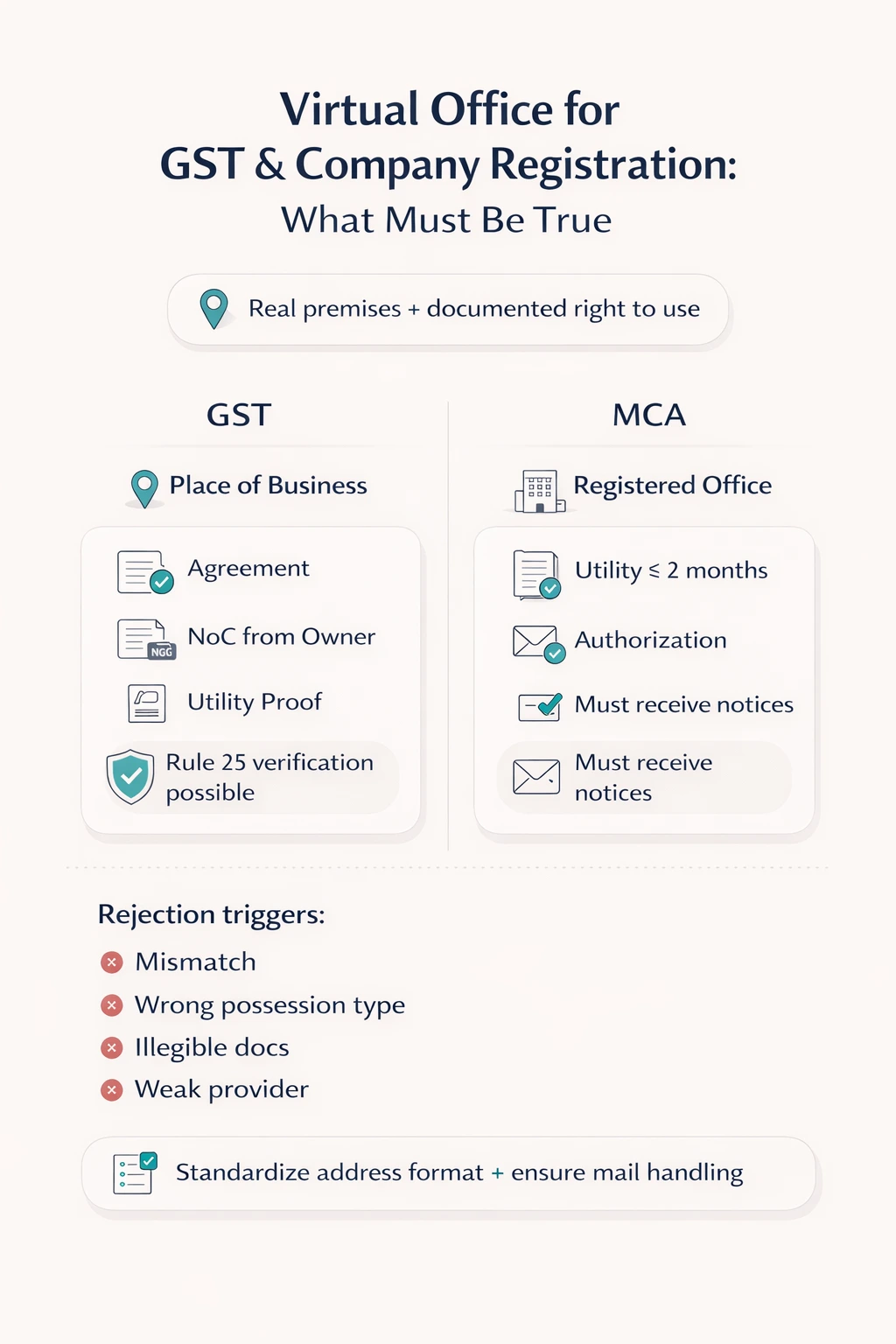
Is A Virtual Office Legal For Company Registration Under MCA?
For MCA, the key concept is the “registered office”.
Companies Act Section 12 requires that every company has a registered office capable of receiving and acknowledging communications and notices.
Notice what the law focuses on. It does not say “you must own an office”. It focuses on capability and accountability.
That is why virtual offices can work for company registration, when they are real premises and the company can receive official communication there.
What ROC Typically Checks In Practice
ROC objections usually happen when:
• The address does not appear verifiable
• The company cannot be contacted through that address
• The filings and attachments do not show a clear right to use the premises
• There is confusion about multiple companies using the same address without clarity
So the right question is not “is virtual office allowed”, it is “is this particular address and arrangement compliant”.
INC-22 Attachments And Address Proof Basics
The INC-22 form attachments list gives a practical view of what ROC expects around address proof. It includes:
• Proof of registered office address such as conveyance, lease, or rent agreement
• Utility bill not older than two months
• Proof the company is permitted to use the address, if owned by another person or entity
• List of companies sharing the same registered office address, if any
This aligns with the same theme: real premises, right to use, ability to receive communications.
Practical Compliance Tips To Avoid ROC Objections
If you are using a virtual office as registered office:
-
Ensure mail handling is reliable
If the ROC sends notices, you need a system where you receive them fast, not weeks later. -
Keep documentation consistent and current
Utility bill recency and permission proofs are not optional details, they are common check points. -
Avoid “address-only” providers
If a provider cannot explain how they handle verification, mail, and documentation updates, it is a red flag. -
Confirm your compliance expectations with your CA or CS
Especially if you are in a regulated sector, or expect inspections as part of other licences.
Can You Use The Same Virtual Office For GST And Company Registration?
In many cases, yes.
It is common for founders to use one compliant address for:
• Registered office under MCA
• Principal place of business for GST, or an additional place of business, depending on their setup
The key is alignment.
A simple alignment checklist:
• Same address format everywhere
• Same entity name and authorised signatory details where required
• Clear permission trail from provider
• Documents are legible, current, and match the application entries
When A Virtual Office Might Not Be The Right Fit
A virtual office is best for compliance, correspondence, and structured address needs.
It is not ideal if:
• Your business requires on-site storage or warehousing as your primary location
• You have heavy daily walk-ins or retail operations
• A specific licence demands a fully operational premises with staff on-site
In these cases, a virtual office may still work as a corporate address, but your operational compliance may need a different setup.
How To Choose A Compliant Virtual Office Provider In India
Before you pay, ask for clarity on these points.
-
What exact document pack will I receive?
You should get a clear list, not vague promises. -
Is this address suitable for GST, MCA, or both?
Some providers quietly restrict usage. Get it in writing. -
How does mail handling work?
Frequency, notification method, storage window, forwarding process. -
What happens during verification or site visits?
A good provider has a standard process and knows what officers typically check.
Red flags to avoid:
• No sample documents, even in redacted form
• Residential addresses for business registrations
• “Guaranteed approval in 3 days” claims with no attention to your profile
• No written terms on usage and compliance responsibilities
Next Steps With Xporate
If you want the end-to-end India-wide playbook first, start here: Virtual Office in India for GST and Company Registration guide
If you already know the city you want, use the city hubs so you get local context:
• Virtual office in Delhi
• Virtual office in Gurgaon
• Virtual office in Bangalore
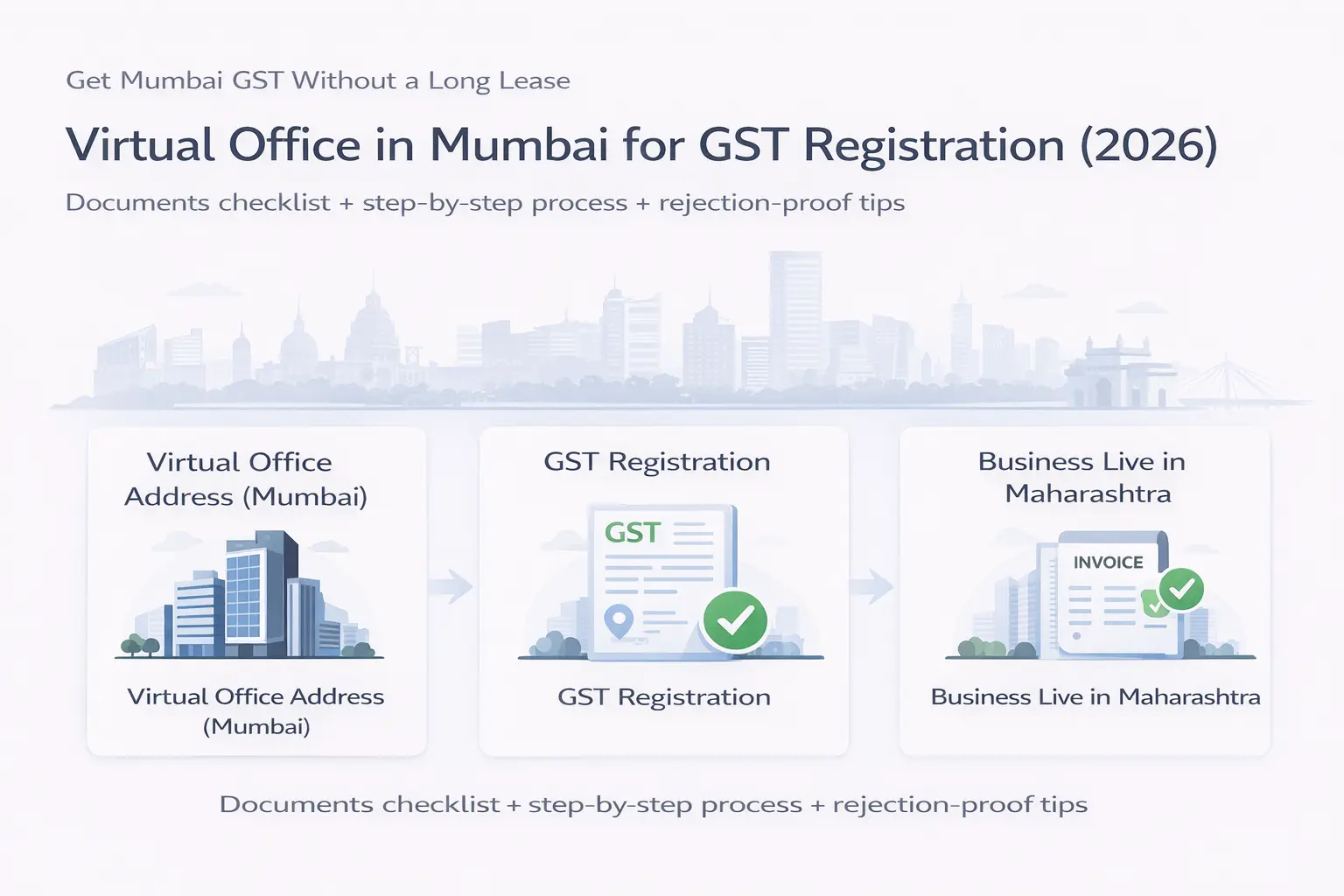
• Virtual office in Mumbai
These pages are designed to move from “is this legal” to “here is how to do it correctly”.
Frequently Asked Questions
Is A Virtual Office Legal For GST Registration In India?
Yes, as long as the premises is real, verifiable, and supported by correct proof of possession and permission documents. CBIC instructions emphasise sticking to the listed document requirements and avoiding unnecessary extra demands.
Can GST Officers Physically Verify A Virtual Office Address?
Yes. Physical verification can be done before or after registration in certain cases, and the report is uploaded in FORM GST REG-30.
What Documents Do I Need For GST Registration With A Virtual Office?
Usually a valid agreement or arrangement document, a permission document such as a consent letter or NOC, and premises proof like a utility bill or similar proof, along with your entity and signatory KYC.
Is A Virtual Office Legal For Private Limited Company Registration?
Companies Act requires a registered office capable of receiving and acknowledging communications. A compliant virtual office can work if it is a real premises and your filings support your right to use it.
What Does MCA Typically Ask For As Registered Office Proof?
Common attachments include proof of address, utility bill recency, and proof that the company is permitted to use the address.
Can Multiple Companies Use The Same Virtual Office Address?
Yes, it is common in business centres. The key is that each company has its own documentation trail and the premises is genuinely operational for correspondence.
Will Using A Virtual Office Increase My Chances Of GST Rejection?
Not by itself. Rejections are usually due to mismatches, incomplete documents, incorrect possession category, or inability to verify the premises.
Should I Talk To A CA Or CS Before Finalising?
Yes, especially if your business has sector-specific licensing, expects inspections, or has a complex multi-state setup.